


weather24: Forecast & Radar
wetter.com Group GmbH
I started using weather24: Forecast & Radar because I wanted something more useful than a quick glance at a temperature number. In daily life, weather decisions are rarely about the forecast alone: they affect school runs, commuting, shopping, gardening, exercise, and whether a household needs to change plans. This free weather app from wetter.com Group GmbH focuses on live conditions, forecasts, and rain radar, and I found that combination particularly practical when several people are trying to coordinate the same day.
What makes it interesting for shared use is not a special family-management system, but the fact that different people can consult the same weather information on their own phones. One person can check the morning outlook before leaving, another can look at the radar before driving home, and someone else can make a decision about outdoor plans without waiting for a message. That sounds simple, but it removes a surprising amount of back-and-forth from an ordinary household.
How weather24 works in a real household
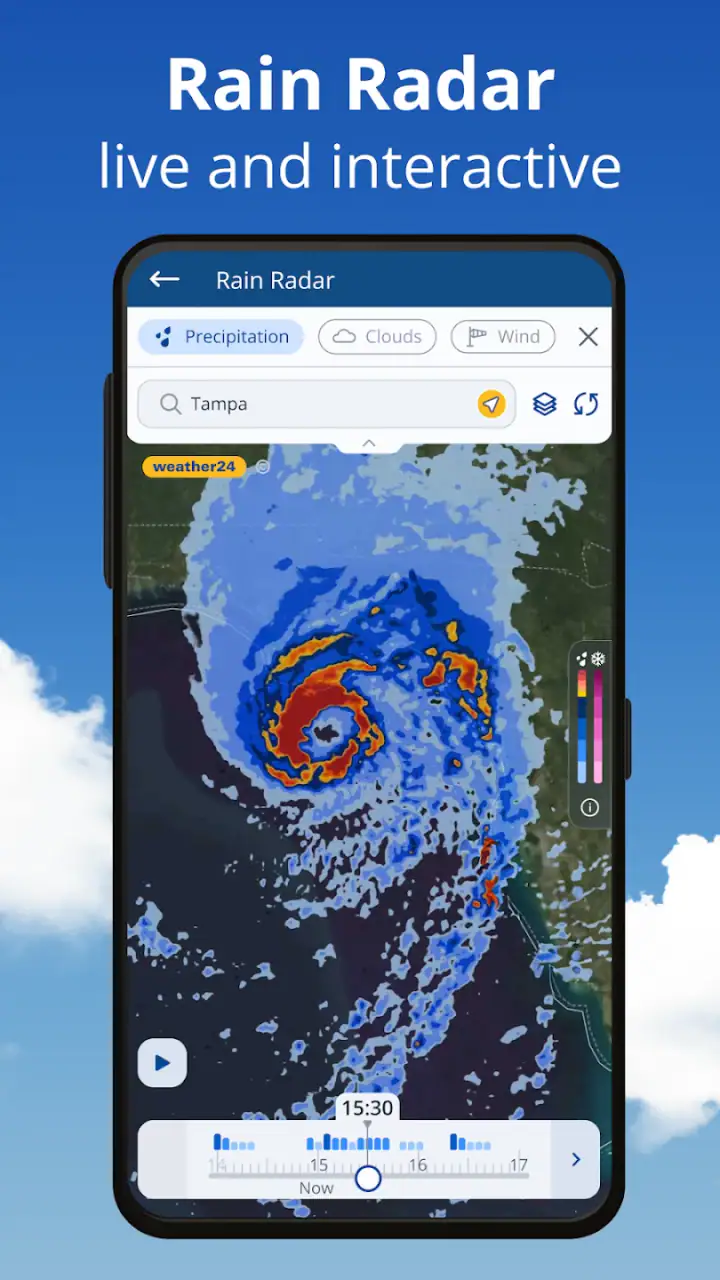
My most useful test was a typical unsettled day: a child needed to get to school, one adult had a commute, and another person was planning an outdoor errand later. A general forecast suggested changing conditions, but the radar view gave a more immediate sense of whether rain was approaching or moving away. I would not treat that as a guarantee, yet it was more helpful than relying on a single morning prediction.
The app suits this kind of situation because it supports two different ways of thinking about weather. The forecast helps with planning several hours or days ahead, while the radar is better for a decision that needs to be made right now. If I am deciding whether to leave on foot, take a jacket, or postpone a short activity, the radar is usually the first place I look. If I am arranging something for later in the week, I pay more attention to the broader forecast.
That distinction is one of the app’s strongest practical lessons. A radar image can help explain what is happening nearby, but it should not replace common sense or longer-range planning. A household that understands this will get more value from the app than someone who treats every colored area on the screen as an exact promise about the next few minutes.
Related News

Instagram Is No Longer a Photo App. It Is an Attention Engine

Microsoft Teams Mobile: When Collaboration Becomes Navigation

How the NFL App Adapts to Android and iOS Updates

Temu: Elevate Your Shopping Experience to Billionaire Status

Why Traffic Rider Works Best as a Precision Reflex Game

How Google’s Find Hub Transforms Everyday Searches
For shared-device use, I would keep the arrangement uncomplicated. Each person can check the app on their own device when needed, while a tablet or phone left in a common area can act as a quick reference for everyone. I would not assume that one person’s settings, saved places, or notification choices automatically represent the whole household. The safest approach is to agree on which location matters and to check the screen directly when a decision affects several people.
Setup that keeps personal boundaries clear
Weather apps often ask for location access because local forecasts are more useful than a generic regional view. My advice is to think about the app’s purpose before choosing how much location information to share. If you mainly need the weather for home, manually selecting a place may be enough. If you move between locations during the day, automatic location can be more convenient, but it also makes the app more closely tied to the device holder’s movements.
This is especially important on a shared phone. A household should avoid treating one person’s device as a neutral public screen if it also contains that person’s private information and location context. I would use a common device for general checking only when everyone understands who controls it. For personal phones, each user should make their own choice about location access and notifications rather than copying someone else’s setup without thinking.
Gallery
The app is free to install, which makes trying it straightforward. It also contains optional in-app purchases ranging from $0.99 to $6.49 per item, so I would review any purchase prompt before confirming it, particularly on a device that children or guests may use. The age rating is Everyone, which makes it approachable for a broad audience, but an age rating does not remove the need for sensible household rules around purchases, device access, and personal information.
I also like that the app has a clear role. It is not trying to become a chat room, a family calendar, or a task manager. That limits what it can coordinate, but it also keeps the weather information easy to understand. If my household needs to decide whether a football practice can happen, the app can provide the weather context; it cannot replace the coach’s message or confirm that a venue is open.
On a phone that meets the Android requirement of version 6.0 or later, the current release is 2.75.0. That makes it accessible on many older Android devices, although an older phone may still feel slower than a newer one depending on its overall condition. The app is also available as a mobile weather option for people who want the same general type of information while moving between home, work, and school.
Using the radar to coordinate plans
The radar is where I think the app earns its place beside a normal weather search. A standard search is excellent when I want a quick answer such as today’s temperature. It becomes less satisfying when I am trying to judge the movement of rain around a specific plan. In that situation, the visual view gives me a better basis for discussion with other people in the household.
For example, before leaving for a short trip, I would check the radar and then tell the others what I actually saw: rain appears to be moving toward the area, or the heavier patch seems to be passing. That wording matters. I would avoid saying, “It definitely will not rain,” because radar is a planning aid, not a personal guarantee. This is a small but valuable habit when several people are making decisions from the same screen.
Another useful workflow is to check twice rather than once. I might look before breakfast to understand the general pattern, then check again shortly before leaving. The first look helps with clothing and transport choices; the second helps with timing. This is more realistic than constantly refreshing the app, and it avoids turning weather checking into a distraction for everyone in the house.
The app can also help divide responsibility. One person can check the morning forecast, while the person who leaves later can inspect the radar before departing. That is better than assuming the earliest forecast remains accurate for the entire day. It also respects the fact that different household members have different schedules and may need different information.
There is a trade-off here. A visual radar can feel more precise than it really is, especially when a user zooms in and sees a distinct band of color. Local terrain, timing, and the changing shape of precipitation can all affect what happens at street level. I use it to decide whether to wait, carry rain protection, or allow extra travel time, not to make high-stakes decisions that require official warnings.
Age, trust, and everyday independence
The Everyone rating is appropriate for the basic task. A young person can understand a temperature, a forecast symbol, or a rain pattern without needing complicated instructions. That can encourage independence: a child who wants to know whether to take a coat can check the information rather than asking an adult every time.
Even so, I would teach younger users one important rule: weather information supports a decision but does not overrule an adult’s safety judgment. A child may see a clear-looking radar area and still need to stay indoors because of a school instruction, a local warning, or unsafe travel conditions. The app is useful for learning to plan, not for transferring responsibility to the screen.
For older relatives, the straightforward purpose can also be helpful. Someone who does not want a crowded social app or a complicated planning tool can open a dedicated weather app and focus on the information that matters. The radar may take a little explanation at first, so I would show how to interpret movement and timing rather than simply saying that brighter colors mean “more rain.”
Trust is also about communication. If one household member reports what they saw, it is better to mention when they checked and which place they viewed. “The radar looked clear around home a few minutes ago” is more responsible than presenting a forecast as an absolute fact. This habit becomes particularly useful when people are traveling between neighborhoods or nearby towns with different conditions.
I would not choose this app as a substitute for official emergency information. For severe weather, road closures, school decisions, or urgent public safety instructions, I would consult the relevant local authority as well. The app can be a convenient first look, but a general weather tool should not be the only source used when consequences are serious.
Where it stands against familiar alternatives
The usual alternative is a built-in phone weather widget. That option wins for speed: I can often see the current temperature without opening anything. However, a widget tends to encourage a quick glance, while weather24: Forecast & Radar makes more sense when I want to move from a general forecast to a rain-focused view and make a plan.
A web search is another competitor. It is useful when I do not want another app, and it can be enough for a single question. The drawback is that searching repeatedly feels less consistent, especially when several people in a household use different wording or different locations. A dedicated app gives everyone a common place to look, which makes coordination easier even without built-in family features.
More specialized weather tools may appeal to users who need technical meteorological detail, outdoor-sport planning, or highly focused warning information. I would choose one of those instead if my decisions depended on advanced data presentation rather than an accessible combination of forecasts and radar. weather24 is better suited to everyday users who want useful visual context without turning a simple check into a technical briefing.
The app’s popularity suggests that this balance works for many people: it has an average rating of 4.7 from around 1.5 million ratings and has passed 50 million installs. Those figures do not prove that it will suit every person, but they do show that it is an established choice rather than an obscure experiment. I still judge it by my own routine, because a commuter, a gardener, and someone who only checks the temperature once a day need different things.
Small habits that make the app more useful
My first tip is to separate “planning weather” from “leaving-now weather.” Use the forecast to shape the day, then use the radar when timing matters. This avoids the common mistake of checking a forecast hours earlier and assuming it answers a later question.
My second tip is to make the location explicit when coordinating. If people are in different places, say which location was checked. A forecast that is accurate for home may be irrelevant to a workplace, a school, or a destination a short drive away. This is a simple way to prevent a shared app from creating false confidence.
My third tip is to avoid overchecking. A household can agree on a few useful moments: once when planning the day, once before a time-sensitive trip, and again only if conditions are visibly changing. That keeps the app helpful rather than letting it become a source of constant interruptions.
My fourth tip is to pair the app with a real-world backup for important plans. If a family is organizing travel, an outdoor event, or a long walk, check transport information, venue updates, and official alerts as appropriate. The weather screen answers one part of the question; it does not confirm every practical detail surrounding the plan.
There is also a useful accessibility habit: when explaining the app to another person, describe what the forecast means for their action. Instead of discussing symbols in isolation, say, “This looks like a good time to leave, but take rain protection for the return.” That turns weather information into something understandable and makes the app more valuable for children and older adults.
Who should use it and who should skip it
I would recommend it to people who want more than a static temperature widget, especially households that regularly coordinate school, work, errands, and outdoor activities. It is also a good fit for anyone who finds a radar view easier to understand than a paragraph of forecast text. The free entry point makes it easy to test without committing to a subscription.
I would be more cautious if you want a highly specialized tool for professional forecasting, detailed outdoor navigation, or emergency decision-making. I would also skip it if you dislike visual weather maps and only want the fastest possible current-temperature glance. In that case, a built-in widget may be less effort.
People who share devices should pay attention to account and purchase boundaries. I would not let a child freely confirm optional purchases simply because the app is rated Everyone, and I would not assume that one person’s location settings are suitable for everyone else. The app itself can remain simple while the household still needs clear rules about who uses which device and who makes final decisions.
My household verdict
After using weather24 as a practical planning tool, I see its main strength in the transition from forecast to action. It gives a household a shared reference for ordinary choices without pretending to manage the family. The radar is especially useful when rain timing matters, while the wider forecast is better for organizing the shape of the day.
It is free, rated for Everyone, and developed by wetter.com Group GmbH, with a long presence dating back to May 17, 2010. The current version, 2.75.0, supports the experience on Android devices running version 6.0 or later. Optional purchases are available, so I would still check the purchase settings on shared devices before handing the phone to a child.
My final view is positive, with one clear condition: use the app as an informed guide, not as an unquestionable authority. For a household that wants quick forecasts, live weather context, and a better way to discuss rain-related plans, weather24: Forecast & Radar is a sensible choice. Its best feature is not that it eliminates uncertainty; it helps me make more reasonable decisions while remembering that weather can still change.
FAQs for weather24: Forecast & Radar
What features does Weather24: Forecast & Radar offer?
Weather24: Forecast & Radar provides comprehensive weather updates, including real-time forecasts, interactive radar maps, and severe weather alerts. The app covers hourly and daily forecasts, allowing users to plan their activities accordingly. It also offers additional features like humidity levels, wind speed, and sunrise/sunset times to give users a detailed weather outlook.
Is Weather24: Forecast & Radar free to use?
Weather24: Forecast & Radar offers a free version with basic features, which is sufficient for general weather updates. However, for an ad-free experience and access to premium features like extended forecasts and advanced radar features, users can opt for a subscription model that varies in pricing depending on the selected plan.
How accurate is the weather information provided by Weather24?
Weather24 utilizes data from reliable meteorological sources and cutting-edge technology to ensure high accuracy in its forecasts. The app updates frequently to reflect the most current weather conditions, providing users with precise and reliable information to help them make informed decisions about their day-to-day activities.
Does Weather24: Forecast & Radar support multiple locations?
Yes, Weather24 allows users to add multiple locations to their profile, making it easy to check weather conditions in different areas. This is especially useful for users who frequently travel or have family and friends in different regions, ensuring they stay informed about weather changes wherever they are.
Can I receive weather alerts from Weather24: Forecast & Radar?
Weather24 offers customizable weather alerts, keeping users informed of severe weather conditions such as storms, heavy rain, or extreme temperatures. Users can set preferences for which types of alerts they wish to receive, ensuring they are only notified about weather events that are relevant to their needs and interests.
Pros
- Accurate and timely weather updates
- User-friendly interface with intuitive design
- Detailed radar maps for precise tracking
- Customizable alerts for severe weather
- Supports multiple locations for travel planning
Cons
- Occasional ads can be intrusive
- Premium features require a subscription
- Limited offline functionality
- Battery consumption can be high
- Some features need stable internet


